Bruce Springsteen’s “State Trooper” is a haunting and minimalist masterpiece from his iconic 1982 album, Nebraska. Recorded on a simple four-track recorder, the song’s starkness and raw emotion are as bleak as the album’s gray cover. Springsteen’s lone acoustic guitar and harmonica create a chilling atmosphere, while his raw vocals perfectly convey the narrator’s fear and desperation. “State Trooper” tells the story of a fugitive on the run, pleading with a state trooper to let him pass.
The lyrics are sparse but powerful, painting a picture of a man driven to the edge. The repetitive chorus, “Mister state trooper, please don’t stop me,” underscores the narrator’s desperation. The song’s influence from the New York City synth-punk band Suicide is evident in its minimalist instrumentation and dark, repetitive structure.
“State Trooper” has become one of the most beloved and haunting songs in Springsteen’s catalog, resonating with fans for decades and covered by numerous artists. Its inclusion in the opening credits of the acclaimed HBO series The Sopranos further solidified its place in popular culture. The song explores themes of desperation, escape, and the bleakness of life on the run, touching on the power dynamics between law enforcement and those on the fringes of society. While the narrator’s crimes are never explicitly stated, the song leaves the listener to grapple with the complexities of his situation and the choices that led him to this point.

“State Trooper” is a master class in which Bruce Springsteen displays his ability to create powerful and evocative music with minimal instrumentation and stark lyrics. Its raw emotion and haunting atmosphere continue to captivate listeners, solidifying its place as one of Springsteen’s most enduring and impactful songs.
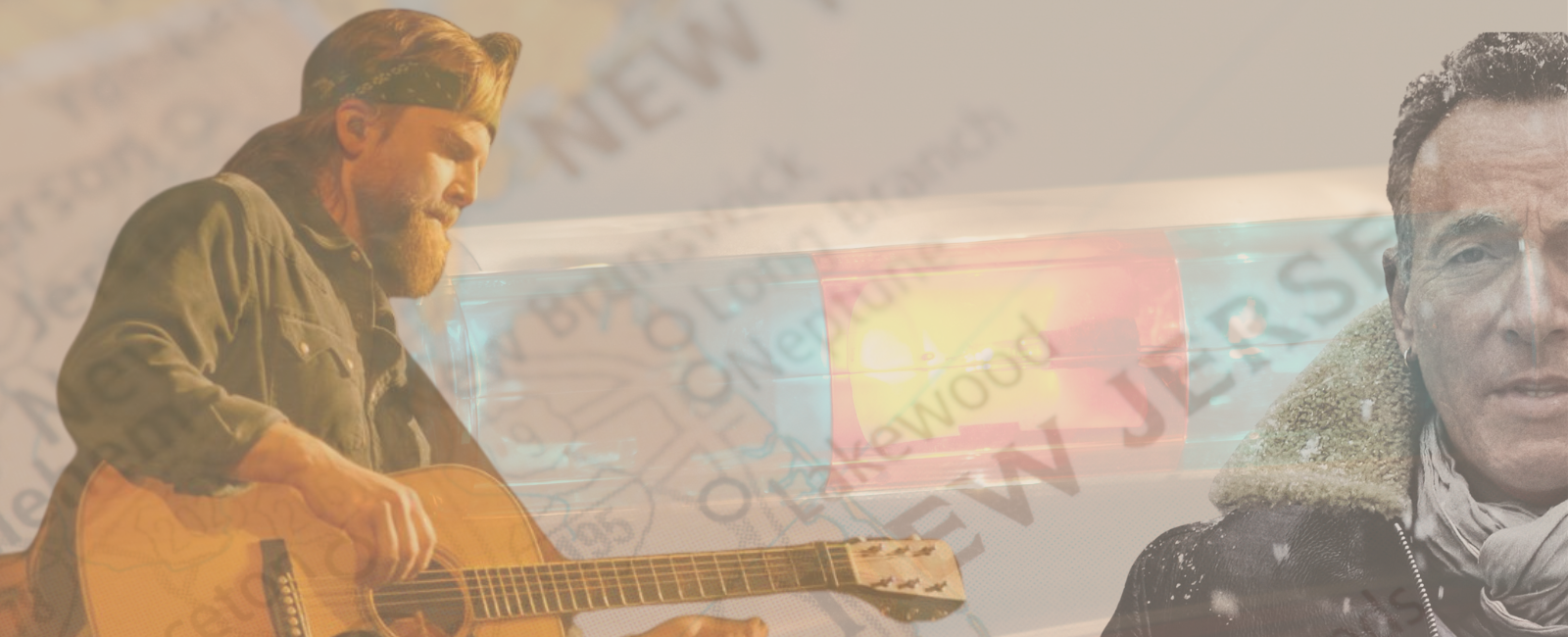
There is a reason some of the most influential artists of the day chomp at the bit to duet with Bruce or cover him. Recently he has duetted with Bleachers, The Killers, Zach Bryan, The Gaslight Anthem, and been covered by Lucy Dacus of boygenius. And today on the Boss’ 75th birthday West Virginian Charles Wesley Godwin has released a cover of the aforementioned “State Trooper” as well as a new version of his original track, originally released on “Family Ties” featuring the whole band.
Of “10-38” Godwin explains on his socials, that he and Zach Bryan were playing a show together and listening to “Nebraska” before the show began. Bryan talked about wanting to write a sequel to “State Trooper” and the two of them got to work on what eventually became Zach’s original “Jamie” that featured Godwin. Charles goes on to explain that he really liked what he had written as that possible sequel and finished it up and now it’s available to hear the rest of that story from his perspective. The potent pairing of the cover and new original is indicative of Godwin’s deep appreciation for Springsteen’s storytelling prowess and his own ability to craft narratives that cut to the bone.
Godwin’s rendition of “State Trooper” stays very close to the original while making it his own with his singing. His Appalachian-inflected vocals lend a sense of weary resignation to the lyrics, while sparse acoustic guitar and haunting fiddle evoke the desolation of the song’s highway setting. It’s a testament to the enduring power of Springsteen’s songwriting that it can be reinterpreted in such a radically different style while retaining its emotional core.
But it’s with the sequel track, “10-38,” that Godwin truly steps into his own. Picking up where Springsteen’s narrative left off, the song follows the protagonist further down a dark path. The title itself is a nod to police code for a stopping a suspicious vehicle. Godwin’s lyrics paint a vivid picture of a man that is trying to do his best as a trooper while loving his family. The song leaves you with a sense that the end is coming and what is on a man’s mind when the sun is rising on your final day.
Together, these two tracks form a powerful meditation on the themes of guilt, redemption, and the enduring scars of trauma. Godwin’s decision to release them as a pair demonstrates his ambition as an artist and his willingness to engage with challenging material. It’s a bold move that’s sure to solidify his reputation as one of the most exciting voices in contemporary Americana.