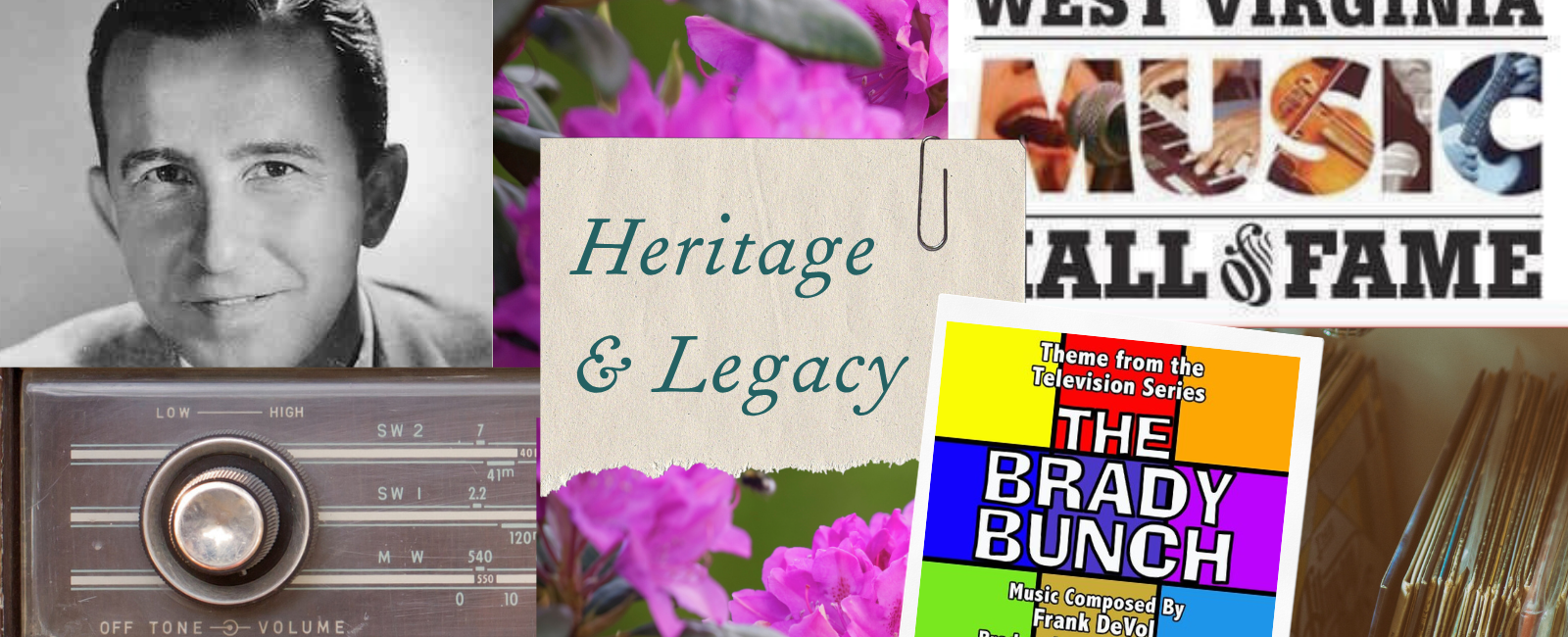
West Virginia Music Hall of Fame – Class of 2008
Kanawha County native and Nashville legend, Red Sovine, had one of the most unique careers in the history of country music. When he died suddenly in 1980 at the age of 62, he left behind a legacy of over 300 recordings, spanning five decades. His impressive record sales are such that he still ranks #192 on the Billboard Charts list of the “Top 400 Country & Western Artists – All-Time.”

Sovine began playing country music professionally in 1935 on radio programs in southern West Virginia. By 1955, he was living in Nashville and had placed several records on the national charts.
Looking closely at the numbers, between 1955 and 1980, Red Sovine had 31 songs on the Billboard Country & Western Chart. Among those songs:
• 13 reached the “Top 40.”
• 6 made the “Top 10.”
• 3 songs climbed all the way to Number 1.
Having three number-one songs is a major career achievement for anyone, and upon closer inspection, one sees that Red did it the hard way. Each of his three chart-toppers came approximately ten years apart, placing a hit squarely in the middle of three different decades.
In 1955, Sovine teamed up with Webb Pierce to hit #1 with a cover of George Jones’s “Why Baby Why?” Ten years later, in November of 1965, “Giddyup Go” became Red’s second number-one song, holding the top spot for six weeks. And in 1976, forty years into an already stellar career, Red Sovine had the biggest hit of his life. His song, “Teddy Bear” (which he co-wrote), about a lonely, wheelchair-bound young boy seeking connection on a CB radio, became the first country record to reach #1 in only five weeks.
Red Sovine’s persistence, belief in his talents, and his ability to play “the long game” in a city (Nashville) that cycles through hundreds of “new” artists each year defined his career. He had important mentors like Webb Pierce and Hank Williams, and he paid it forward by becoming a mentor to young artists such as Charlie Pride.
But most importantly, he could sing, he could recite, he could deliver a song. At the height of “Teddy Bear’s” success, a Nashville DJ described Sovine’s vocal style best when he said, “He milks every drop of meaning out of every song he records.”
Beginnings
Woodrow Wilson Sovine was born in Charleston, West Virginia, on July 17, 1918. With a headful of vibrant ginger hair, he was destined to receive the common nickname assigned to all redheads: Red.
Red’s father, Alonzo Sovine, worked on large construction machinery as a steam engineer. Shortly after Red’s birth, the widespread use of gasoline and diesel-powered machinery soon resulted in hard times for the Sovine family.
Red’s mother, Rebecca West Sovine, played harmonica and concertina but never pursued music professionally. She taught Red and his siblings many older hymns, and they all shared a love of the early recordings of Jimmie Rodgers and Jimmie Davis.

The young Red was also influenced by his second cousin, Billy Cox. Known as the “Dixie Songbird,” Cox appeared regularly on WCHS in Charleston and made records for the Columbia label. Sometimes Red would accompany his cousin to the radio station or to live appearances. It was this experience that sparked Red Sovine’s desire to become a performer.
As Red told an interviewer in 1975, “I was 12 years old when I told my father I wanted a guitar. I had been practicing on a friend’s guitar, and I showed my pop I was getting serious about playing. He was impressed enough that he bought me one of those guitars with the resonator on the front. He paid twelve dollars for it.”
Red immediately began acting out his own pretend “radio shows” in the family barn—performing songs, reading the news and commercials, and practicing jokes. In 1934, he felt ready to go professional and formed a duo with his boyhood friend, Johnnie Bailes. They billed themselves as Smiley & Red – The Singing Sailors. They mostly played Jimmie Rodgers songs and other popular tunes. The experiences were valuable, but the pay was meager.
In 1935, Red Sovine briefly set his guitar aside to take a job in a hosiery mill. The mill was part of a New Deal project in the newly founded town of Eleanor, WV. Red liked his work at the mill, and during the years of wartime prosperity, he rose to a management position. However, he stayed in touch with all his musician friends, and some, like the Bailes Brothers, would visit Charleston. Red would attend their shows and spend time with them afterward.
By 1948, Red got restless. He decided to put a band together, the Echo Valley Boys, and head to Shreveport, Louisiana. Some other West Virginia musicians had recently had success on radio station KWKH, the home of the “Louisiana Hayride.” The star of the program at the time was the up-and-coming future legend, Hank Williams.

Hank Williams to the Rescue
Red’s band got hired by KWKH, but they were relegated to a 5 AM slot, playing to a small audience and very few advertisers. As a result, they were not getting the gigs and show dates they had hoped for, and their money was running out. According to the book Mountaineer Jamboree by Ivan Tribe:
“By Christmas, Red’s life savings were almost gone, his band had received their lay-off notices, and his wife and kids had been sent back to West Virginia by bus. Then Hank Williams came to his rescue and helped him secure a job at his old station in Montgomery, Alabama.”
Red began to thrive in Alabama. His family soon rejoined him, and he recruited three more West Virginia musicians for a new band. In addition, Hank’s mother, Mrs. W.W. Stone, acted as his booking agent, and Hank helped him get a contract with his label, MGM Records.
When Hank Williams left Shreveport for Nashville and a spot on the “Grand Ole Opry” in June of 1949, Williams saw to it that Red Sovine became his replacement on the “Louisiana Hayride.” Over the next four years, Red recorded 28 singles, mostly similar to Williams’s honky-tonk tunes. While they didn’t do well on the charts, they did establish him as a solid performer.
Webb Pierce and the Road to Nashville
While working on the Hayride, Sovine made another valuable friend in fellow performer Webb Pierce, who was just at the beginning of a long string of Top Ten country hits. Pierce asked Red to lead his band, the Wondering Boys. The deal included an opening act spot for Red and, eventually, a record deal with Decca in 1954.
In 1955, he had a Top 15 hit with “Are You Mine?” and in 1956, he had his first number-one hit when he and Webb Pierce recorded a duet cover of George Jones’s “Why Baby Why.” Sovine had two other Top Five singles that year and joined the cast of the “Grand Ole Opry” in the fall of 1956.
By 1959, Red Sovine had recorded 48 sides with Decca Records. He then signed to Starday Records and began touring the club circuit as a solo act. According to Allmusic:
“In 1963, in Montana, Sovine passed on the helping hand given him by older performers when he heard a young Charlie Pride performing and suggested he move to Nashville. Sovine opened doors for Pride at Webb Pierce’s Cedarwood publishing house.”
But Red’s career had stalled. In 1964, his “Dream House For Sale” reached #22 on the country charts. It had been nearly eight years since his last hit.


Late Career Spoken Word & Recitations
The small, specialized musical genre of “spoken word truck driving songs” dates back to the late 1940s. Red Sovine’s label, Starday, featured several artists who recorded such songs. At some point, it was thought that pairing Sovine’s rich, emotive baritone voice with trucker material might work. It did.
In 1965, Sovine found his groove when he recorded his second career #1 country tune, a song he co-wrote, “Giddy-Up Go.” His spoken-word presentation of the story of a father-son truck-stop reunion spent six weeks at the top of the charts. In 1975, he had another big spoken-word trucker song with the ghost story, “Phantom 309.”
Saving the best for last, Red Sovine’s biggest hit came in 1976 with the tearjerker tale about a disabled child’s CB-radio relationship with caring truckers. “Teddy Bear” would spend three weeks at #1 on the country chart and reach #40 on the Pop Charts.
Sadly, just four years later, on April 4, 1980, Red Sovine suffered a heart attack while driving his van near his home in Nashville. He crashed and died from his injuries. He was 62 years old.

Closing Notes
• The song “Phantom 309” is the tale of a hitchhiker who gets a ride from a trucker who turns out to be a ghost. The story was later adapted by Tom Waits, who performed it as “Big Joe and Phantom 309” on his 1975 Nighthawks at the Diner live album.
• Red Sovine was inducted into the West Virginia Music Hall of Fame in 2009.
Recommended Listening
- “Why Bay Why” – Webb Pierce and Red Sovine. You can see from this video how well the guitar playing Red and his duet partner Webb work together on this cover of a George Jones’ song. This song was a #1 County & Western hit for the duo. Turn it up! Listen HERE.
- “(I’m a) Juke Joint Johnny” – Red Sovine. One of the many “Honky Tonk” records he made, similar in style to songs by his mentor, Hank Williams. This song has that bounce and drive that kept honky tonk music fans on the dance floor. Listen HERE.
- “Phantom 309” – Red Sovine. This video uses animation to bring to life the creepy, ghost story song of the Phantom 309. Spooky. Listen HERE.
- “Teddy Bear” – Red Sovine. This was a huge hit in 1976. Get out your tissues. This is a tear inducing record. You’ve been warned. Listen HERE.
Sources:
*Mountaineer Jamboree by Ivan Tribe
*Billboard Top Country Singles – Whitburn
*Billboard Number One Country HIts – Whitburn
*WV Music Hall of Fame
*Allmusic
*Wikipedia
Images:
*Starday Records
*Gusto Records
*Bear Family Records – Box Set Notes
*Discogs