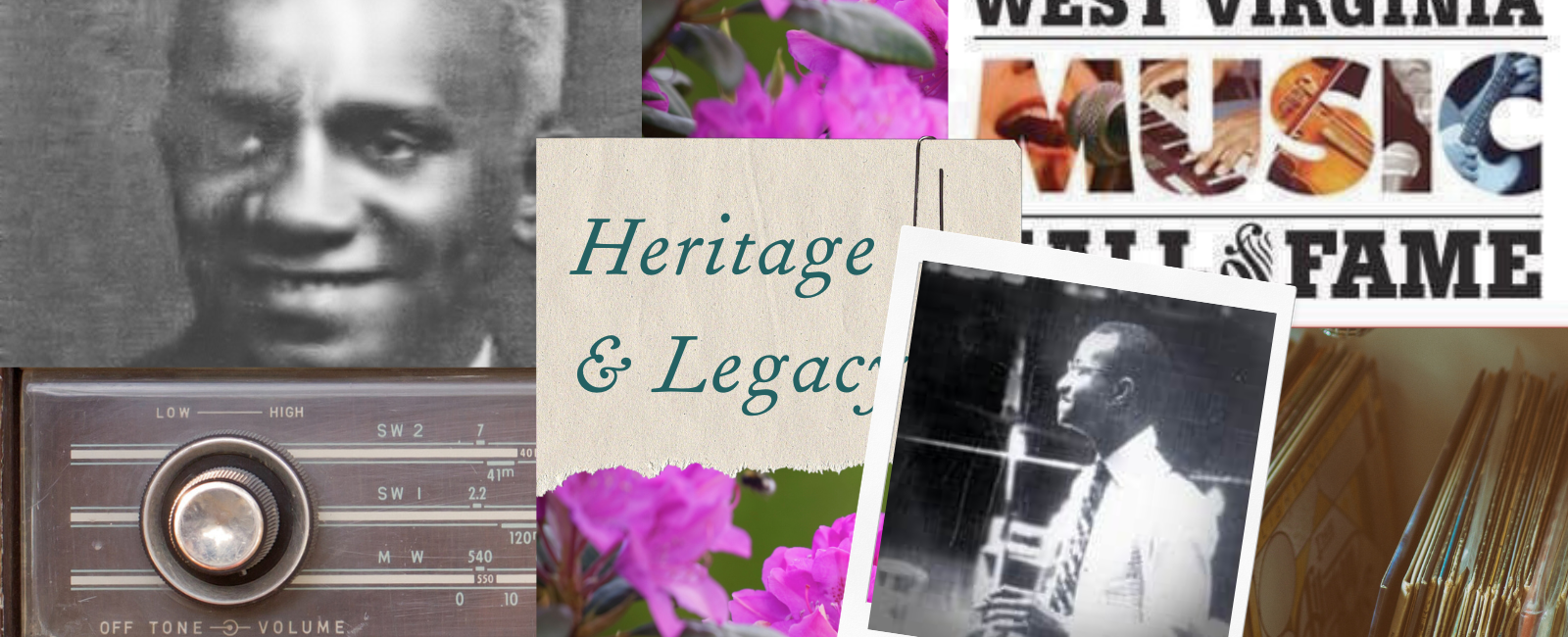
Maceo Pinkard is a 2008 inductee into the West Virginia Music Hall of Fame. He was a Harlem Renaissance songwriter, pianist, band leader, music publisher and composer of ‘Sweet Georgia Brown’.
When Maceo Pinkard, a songwriter and native of Mercer County, West Virginia, died in July of 1962, his passing warranted a four-paragraph obituary in The New York Times. The notice, titled “Maceo Pinkard Dies; Song Writer Was 65: Composer of ‘Sweet Georgia Brown,’” detailed his successful career as a songwriter and music publisher in New York City, and effectively positioned him as a prominent songwriter of the Harlem Renaissance.
A Bluefield Beginning
What the Times obituary failed to mention in 1962 was that Maceo Pinkard was born, raised, and educated in Bluefield, West Virginia. Born on June 27, 1897, his mother, Mary Ellen, was an educator, and his father, G. Pinkard, was a coal miner. Bluefield was experiencing a “boom town” phase, as coal was “king” in the region and the city was at the center of the industry. Though segregated, the town boasted a thriving African-American community with quality schools and libraries.


Pinkard began public school in Mercer County. He was bright, musical, and hardworking, later studying music theory and composition at the Bluefield Colored Institute. Founded in 1895 as a “high-graded school” for African Americans, the institute was within 100 miles of 70% of West Virginia’s African American residents at the time. Pinkard graduated in the Class of 1913 at the unusually young age of sixteen. While many of his classmates went on to become teachers, Maceo Pinkard knew he wanted a career in music.

Rise to Fame in New York City
In 1914, Pinkard wrote his first major song, the blues standard “I’m Goin’ Back Home.” Later that same year, the 17-year-old entrepreneur founded a theatrical agency in Omaha, Nebraska. In 1919, Maceo made the significant move to New York City, where he immediately created Maceo Pinkard Music. Forming the company allowed him to sell his compositions directly to national publishing houses.
Success came quickly. His first big hit, “Mammy o’ Mine,” arrived in the summer of 1919. Starting in 1920, he began producing a rich catalog of songs, including hits like “Sugar,” “Here Comes the Showboat,” “Gimme a Little Kiss, Will Ya Huh?” and “At Twilight.” Jazz legends Bix Beiderbecke, with drummer Gene Krupa and Benny Goodman, later recorded Pinkard’s “I’ll Be A Friend with Pleasure” in 1930. Other hits included “Rose of Washington Square” and “Them There Eyes,” a staple for Billie Holiday and a century’s worth of jazz singers.
Pinkard also led a touring orchestra and composed a stage revue called Liza. Furthermore, he is thought to be the first African-American owner of a music publishing company in the U.S.

Mentoring Duke Ellington
During the 1920s, Maceo Pinkard became known in Harlem as a young, sharp businessman and a songwriter with a bright future. He excelled at making contacts, advancing his business position, and helping friends navigate the competitive New York City music scene.
One of those friends was a young “Duke” Ellington, who had moved to Harlem in 1923 from Washington, D.C. Maceo became a mentor to Ellington, who recalled the experience in a 1950 interview with Downbeat magazine:
“Maceo Pinkard was the first to take me to a studio for the purpose of recording our group. When I think of how wonderful those men at that period of New York were, and of the way in which they received me, I always feel a glow of gladness and gratitude. Maceo Pinkard opened the door for me.”
In September of 1927, Ellington and his group began their legendary residency as the house band at Harlem’s famous Cotton Club, establishing “Duke” Ellington as a major bandleader, composer, and arranger. Maceo Pinkard was a frequent attendee of these shows.
The Lasting Legacy of “Sweet Georgia Brown”
In 1925, Pinkard co-composed his greatest hit, “Sweet Georgia Brown,” with lyrics by Ben Bernie and Kenneth Casey. Bernie cut the first recording on March 19, 1925, and it quickly topped the charts. Bing Crosby’s 1932 cover became a national #2 hit record. Since then, the song has become a standard in the pop and jazz songbooks, covered by everyone from Cab Calloway to Sarah Vaughan. Even the Beatles recorded a version in Hamburg, Germany, in 1962, backing Tony Sheridan.

The song’s most iconic version, however, was recorded by Brother Bones & His Shadows in 1949. This arrangement featured an iconic whistling introduction and the rhythmic playing of “the bones,” a percussion instrument. The recording became a surprise radio hit, but its lasting impact came in 1952 when the world-famous Harlem Globetrotters basketball team adopted Bones’ version of “Sweet Georgia Brown” as their warm-up music. The magical blend of Brother Bones’ whistling and the spare, rhythmic clatter of “the bones” perfectly matched the energy and irreverent approach of the Globetrotters.
In 1999, the Grammy-nominated album The Love Movement by A Tribe Called Quest included a sample of Pinkard’s 1920 composition “Start It Up.”


Postscript
Maceo Pinkard died in New York City on July 19, 1962. More than two decades later, in 1984, he was inducted by the National Academy of Popular Music and became a member of the Songwriters Hall of Fame. Today, he is widely regarded as “one of the greatest composers of the Harlem Renaissance during the 1920s and 1930s.” Each year, Bluefield State University holds a weeklong festival in honor of Maceo Pinkard and his music.

Sources:
*Wikipedia
*WV History Project
Recommended Listening by author:
“Sweet Georgia Brown” by Brother Bones & His Shadows. 1949. This is the version the Harlem Globetrotters adopted as their warm-up song before each game.
Sweet Georgia Brown – Brother Bones & His Shadows – YouTube
“Sugar” by The Coniglio Connection. 2021. One of Pinkard’s most recorded songs.
Sugar (Maceo Pinkard) – Coniglio Connection 2021 – YouTube
“Honey Rose”- This piano composition shows signs of some early “boogie-woogie” and was a great song to play if you were learning some of the new “modern” dances.
Maceo Pinkard : Honey Rose (1921)
BONUS Cut.
“Sweet Georgia Brown” by The Beatles with Tony Sheridan. 1962. Note the added verse that references Liverpool.
Sweet Georgia Brown- The Beatles