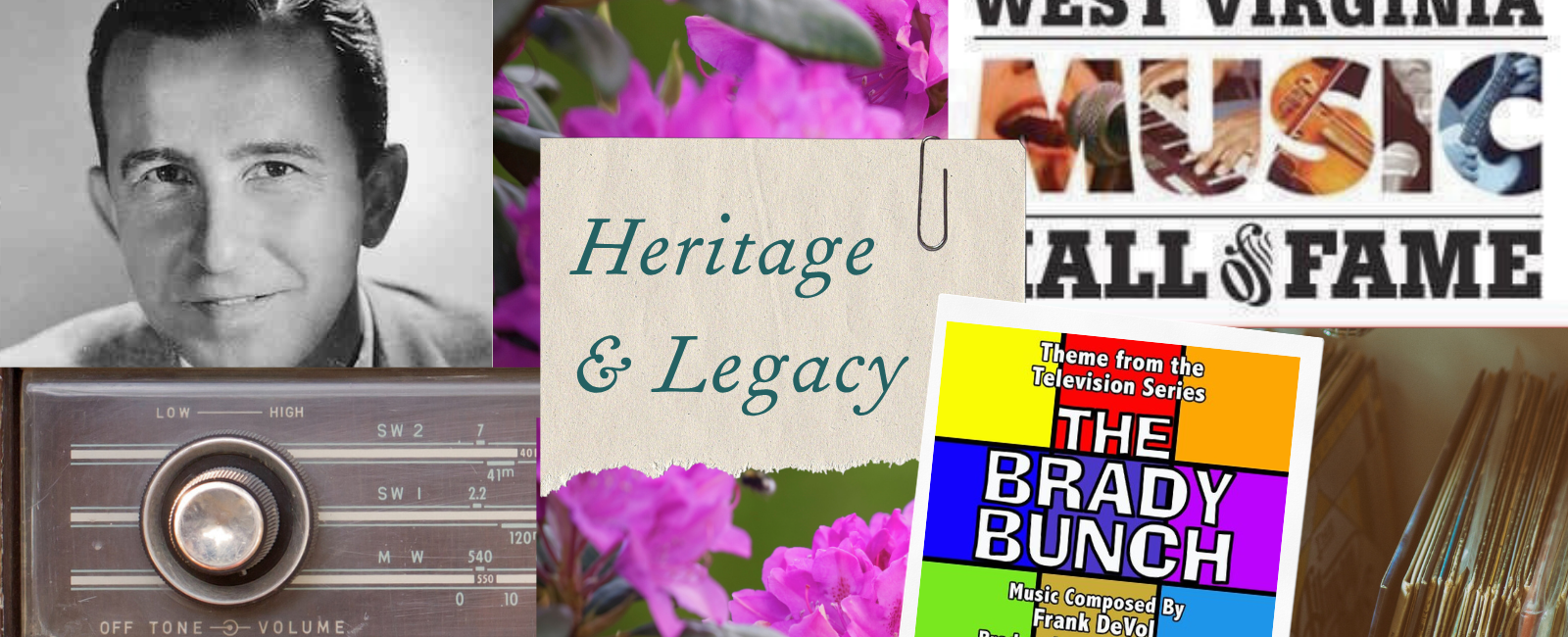
Clark Kessinger- West Virginia Music Hall of Fame – Class of 2007
“Fiddle Me This”
In a state known world-wide for its legacy of fantastic fiddle players, it is Clark Kessinger who is still recognized as the best of them all. Fiddle playing and fiddle players are key ingredients in the musical recipe that makes up the sounds of West Virginia, and Kessinger was the first “superstar” fiddler from the Mountain State. West Virginia fiddlers from Blind Alfred Reed in the 1920’s, to Philip Bowen in the 2020’s, have been influenced by Kessinger’s mastery of “The Devil’s Box”, as churchgoers referred to the dance inducing instrument, in Kessinger’s days. He was known as the “fiddler’s fiddler” and regarded as the fiddler to hire for dances, and the fiddler to beat at contests and conventions. The fiddle was, and still is at the center of West Virginia music.

The tradition of playing the fiddle in all probability came to our mountains with settlers from the British Isles. Fiddle contests are probably older than West Virginia, but there is not much documented history on the subject. There is evidence that many county fairs featured such contests at one time, and there is oral evidence that they were common at rural social events.
The West Virginia Encyclopedia
Clark Kessinger, a fierce competitor, built his reputation by entering, and often winning, one fiddle contest at a time. He played dances and was hired for small social gatherings throughout the Kanawha valley. But he wasn’t just a virtuoso on his instrument, he was a Showman, with a capital “S”. Charles Wolfe, in his book The Devil’s Box: Masters of Southern Fiddling, in a chapter about Kessinger entitled “Pure Fiddling”, writes:
“Clark Kessinger loved to play, he was a master showman; he would shake his hips, crouch like a baseball batter, dance a little, and occasionally let out a spontaneous whoop. He ripped into a tune like a hungry man faced with a plate of fried chicken. When he played a waltz, he could bring a tear to the proverbial glass eye.”

The story of Clark Kessinger begins in South Hills, Kanawha County where he was born on July 27, 1896. He was playing the fiddle in a local saloon, making ten to fifteen dollars a night, when he was only seven years old. By the time he was ten, he was playing for nearby country dances. Kessinger’s great-grandfather and great-uncle were both old-time fiddlers, and he was influenced by other Charleston, WV fiddlers such as Ed Haley, George Dillon and Abe Gleen. Haley is also a member of the West Virginia Music Hall of Fame.
After serving in the Navy during World War I, he began playing in 1919 with his nephew Luches “Luke” Kessinger, who accompanied him on guitar. They performed as The Kessinger Brothers. The pair became very popular and got their own radio show on a new station in Charleston, WOBU, when it opened in October of 1927. Wolfe writes about that time: “The station was not all that powerful at first, but Kanawha County, full of factory towns and coal camps, could boast of around 10,000 radios, more than any county in the state. The people in the area who had somehow missed Kessinger at fiddling contests and dances, now had their chance to hear and admire him.”
Next came the single most important event in the career of Clark and Luke: in February of 1928 a major league recording company set up shop in Ashland, Kentucky, about 40 miles from Charleston. The Brunswick record label hoped to recreate the success Ralph Peer had had in Bristol, VA, in 1927, when he discovered and recorded the Carter Family, and West Virginia legend, Blind Alfred Reed. The Kessinger Brothers were signed to the company and by 1930 had recorded more than 70 sides for the Brunswick label. Their recording of “Wednesday Night Waltz” went on to be a top seller and launched the Kessinger Brothers career. Their recordings became the bestselling fiddle records in Brunswick’s sizable catalog and arguably some of the finest southern fiddling ever recorded. These include such classics as “Tugboat”, “Hell Among the Yearlings”, “Turkey in the Straw”, and “Salt River”.
Following his last recording session on September 20, 1930, Kessinger retired as a recording artist. He and Luke continued to appear as the Kessinger Brothers on their radio show and perform in clubs and at country dances. But for the next 30+ years, Clark Kessinger worked mostly as a house painter.
From time to time, he performed with acts such as “Natchee the Indian” and took part in huge fiddle competitions in which Kessinger, as the “West Virginia State Fiddle Champion” would take on a “National Fiddle Champion” from somewhere in the United States. When Luke died in 1944, the story of the Kessinger Brothers came to an end.

In 1963 Kessinger benefited from the national “Folk Revival” taking place across the US when folk music promoter Ken Davidson encouraged him to return to the music scene and soon he was competing in a variety of fiddle contests. In 1964 Kessinger formed a string band and participated at the Galax, Virginia old-time music contest, winning first prize in the string band category.
In 1966, he was a guest artist on the Grand Ole Opry radio program, on NBC-TV’s Today Show, and at the prestigious Newport Folk Festival in Rhode Island. Three new albums of his music were released by Kanawha Records.


The year 1971 was an eventful and fateful twelve months for Clark Kessinger. In April, he won the coveted World’s Champion Fiddle Prize at the 47th Old-time Fiddlers Convention in Union Grove, North Carolina. Shortly afterwards he recorded 12 tracks for the newly formed Rounder Records. The record company planned to record many albums with Kessinger but before they could follow up with more recordings, Kessinger had a stroke and collapsed on the scene at a fiddler’s convention in Virginia. Sadly, his left hand became numb, and he was unable to play fiddle for the rest of his life. Rounder released his recordings as Clark Kessinger: Old-Time Music with Fiddle and Guitar, in 1972. He died in 1975 and is buried in St. Albans, WV.
Clark Kessinger was among the first class of inductees enshrined in the West Virginia Music Hall of Fame in 2007.

RECOMMENDED LISTENING – by the author.
As we established earlier, Clark Kessinger was the hotshot fiddler from West Virginia. John Morthland in his book The Best of Country Music informs that,
Kessinger had a smooth style that had its share of rhythmic and melodic quirks; he applied much of the technique of concert violinists to his own hillbilly background and became hugely influential among fiddlers already keeping one eye on the charts. His nephew Luches Kessinger provided sympathetic support on sides that jazzed up traditional melodies and delivered a driving force of music.
Here’s a tune exhibiting those qualities, “The West Virginia Special”
West Virginia Special (youtube.com)
Signing and recording with Brunswick Records in 1928, the Kessinger had recorded over 70 sides for the label by 1930. “Wednesday Night Waltz” was their biggest seller.
The Kessinger Brothers-Wednesday Night Waltz (youtube.com)
Hell Among the Yearlings · Clark Kessinger This was a tune he played at every show. It was very popular with live audiences.
Hell Among the Yearlings (youtube.com)
In 1966 Clark Kessinger appeared at the Newport Folk Festival. Here are some highlights.
This 4 minute plus video really shows off Kessinger’s dynamic stage presence. And remember, he’s 69 years old in this footage. Imagine the energy he could bring to the stage in his younger days.
Clark Kessinger – Fiddle Highlights (1966) (youtube.com)
West Virginia’s Finest old-time fiddler. The legendary Clark Kessinger! Sally Johnson, Leather Britches, Billy in the Lowground. Highlights from the Newport Folk Festival 1966
Cover photos source: Mountaineer Jamboree
____________________