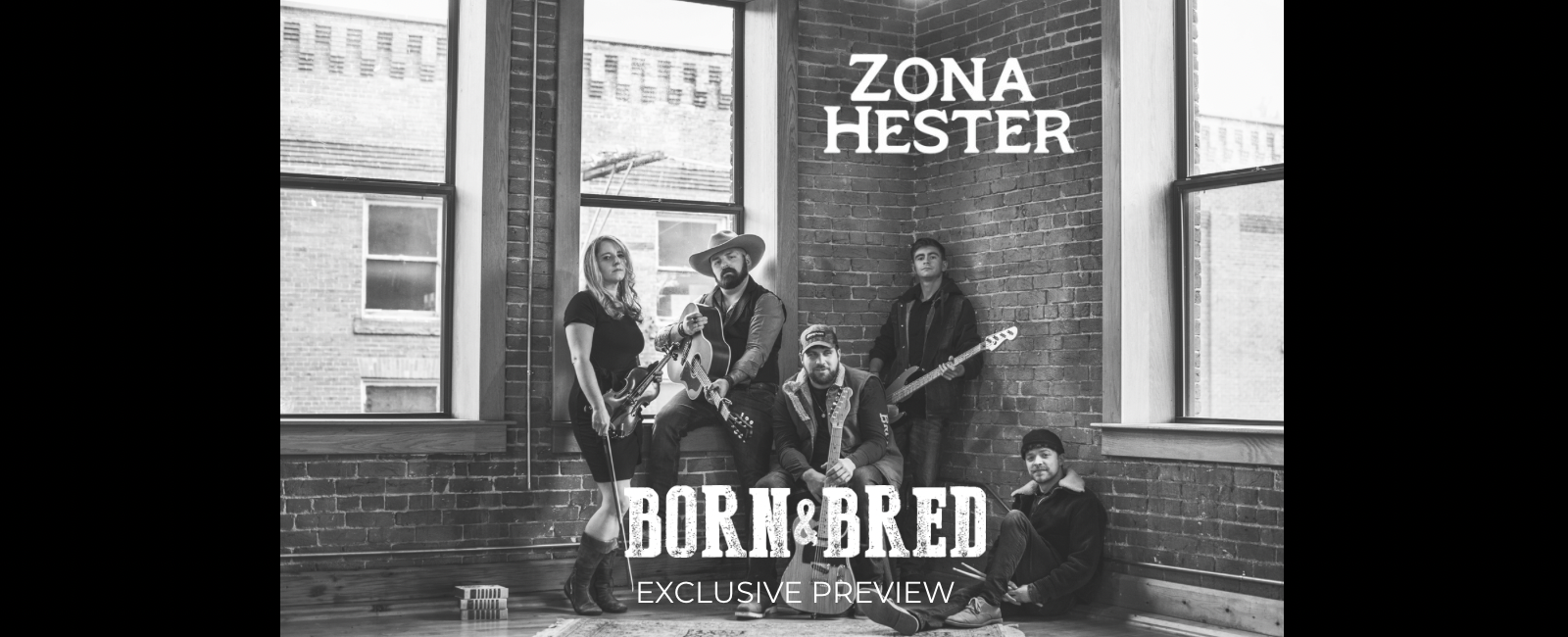
In West Virginia, where life is often juxtaposed with the harsh realities of the opioid crisis, art tends to serve a dual purpose: it’s both a mirror and a lifeline. For Zona Hester, a band that has spent years honing a reputation for high-octane live shows and a gritty, country-alternative edge, their debut single presents a more subdued moment of contemplation of that epidemic.
“Faster Than Angels,” set for release on January 30th, isn’t the foot stomping anthem some might expect from a group known for shaking the floorboards of local venues. Instead, it is a haunting, urgent meditation on the “unraveling” of a life. It tackles the heavy shadow of addiction, a crisis that has hit West Virginia harder than almost anywhere else, with the state consistently reporting the highest overdose death rates in the U.S. (reaching over 80 deaths per 100,000 residents in recent years).
But the band isn’t interested in being a statistic or a stereotype. After a grueling studio process that saw them cycle through multiple producers in search of a “fit” that didn’t feel like a borrowed suit, they found their footing. The result is a track that captures the anxiety of watching someone slip away while the world looks on.
We connected with the band to give you a preview of the track and to discuss the weight of their debut, the terrifying vulnerability of the recording studio, and why honesty, however painful, is the only path forward. Listen to the preview down below.
BB: You’ve built a reputation for a high energy live show, but “Faster Than Angels” feels like a deliberate pivot into something much more somber and reflective. Why was this the story you wanted to lead with for your first official introduction to the world?
ZH: The simplest answer is that we felt like this story was too important to us to wait. We know that we’re going to have plenty of other opportunities to show the other sides of ourselves through our music. This song holds a weight that we didn’t want overshadowed by things we might do in the future. We love our songs that are high energy and in a sense, brighter, but some stories need to be told first to understand the one who is telling them.
BB: You’ve said before that you aren’t focused on being “different,” just “honest.” In a genre like country alternative that is currently exploding, how do you keep that honesty from being swallowed up by the “outlaw” aesthetic or industry trends?
ZH: The first and most important thing is keeping each other grounded. We all act as a sounding board for one another and our ideas, and that forces us to keep things in a certain perspective.
There is also an element of simply not worrying about fitting in. Of course, everyone wants to be accepted, but you cannot approach something you really care about from a “will this sell” perspective. You have to let it be what it needs to be. Otherwise, there is no longevity to what you are doing.
If something we do organically ends up following a trend, or being “trendy,” then great! It just makes it that much easier to grab an audience. But that is the key: it has to be organic. If it is forced, eventually you as the artist will lose interest, and your audience will certainly pick up on that as well. However, something natural and genuinely you, even if you need to take a step back from the work, will be something you can always return to and will want to.

BB: The lyrics touch on the opioid epidemic and the “unraveling” of a life. Growing up in West Virginia, that’s not just a headline; it’s a neighbor, a friend, or a family member. How do you balance the responsibility of telling those stories without feeling like you’re exploiting the trauma of your community?
ZH: To be completely honest, that is something we have struggled with. There were moments when we even discussed not releasing this song for that exact reason. The ultimate truth for us was that this is our community. We have felt it, been affected by it, and watched it. Loved ones, friends, and even strangers struggle.
Sometimes people need help. Maybe it is addiction; maybe it is mental health. It is simply people needing help. This is part of our lives the same way it is part of the lives of everyone around us. We all know someone who has struggled and been affected, and we are not so sure this is just a West Virginia story anymore. This story belongs to everyone.
The most important part was to tell the story from a position of understanding, the very best we could. It is not about judgment, but silent observation. It is about the feeling of guilt and the “what ifs.” It is about the awareness that maybe if someone had just intervened somewhere along the way, tragedy could have been avoided. We share that same pain, and we hoped that if this song could be a comfort or a warning to anyone, it was important that we let it be heard.
BB: Let’s talk about the birth of this track. I know the road to the final master wasn’t exactly a straight line. You actually cycled through several different producers before landing on the final version. What was missing in those early sessions, and what was the “aha!” moment when you found the producer who finally understood the Zona Hester sound?
ZH: The struggle for us was finding someone who we felt could capture what we were doing live and help us translate it into a recorded medium. Everyone we worked with along the way truly was great at their craft, but the sounds we were getting felt like a shoe that is always just one size off. It was not about being good; it was about fitting right.
When we tell people we are country, everyone gets an idea in their head of what country sounds like to them. What clicked for us with Neil (Neil Tuuri of Amish Electric Chair) was that he approached our sound without preconceived notions of what it should sound like. Rather, he just encouraged us to play our sound as we cultivated it and helped us shape that sound for the recorded medium.
All that to say: Neil observed us as an engineer first, then produced us after allowing us to express ourselves.

BB: “Faster Than Angels” implies a race against time. You all mentioned “intervention changing a path.” When you were in the studio, do you feel you were able to capture the feel of the urgent, ticking clock anxiety?
ZH: We hope so. Ultimately, I suppose it is up to the listener to decide. Regarding how we approached it from the very start of the track, we wanted it to feel a little pushed and urgent. As the song progresses, we wanted to add more elements that make it feel bigger, like the culmination of something you know is important but chaotic. I would like to think that we accomplished what we set out to do.
BB: After years of playing these songs live, the transition to a permanent, recorded medium can be jarring. Now that the song is out on January 30th, does it feel like a weight has been lifted, or does it feel like you’re finally letting the rest of the world in on a very private part of yourselves?
ZH: The honest answer is both.
This release is something we have worked very hard on, and it feels infinitely rewarding to finally have something to show for it. We have cared for this song for such a long time and, regardless of any level of success it gets, we are proud of it. We are proud to finally give a voice to a story as important as this one.
But it is terrifying in its own way. When you put as much of yourself into something as we have with this song, the idea that it might be poorly received, or even worse, that no one will care at all, is a scary thought.
Anytime you write a song, it is personal, even if only a little. It comes from somewhere inside of you. Sharing that song with the world is a glimpse of that piece of you. But the truth is, you will never know if it is any good if you do not share it. You can think you have the greatest idea in the world, but until you share it and let people decide for themselves, you will never truly know. In a lot of ways, a song is like a child. The best you can hope for is that you took the time to grow it into something you can be proud of, and then you have to send it out into the world if you ever want it to grow into all it can be. You have done your part; now share it.
The beauty of it all is that there is always another song. Sink or swim, win or lose, there is always another chance. So take it. Scary as hell or not, take the chance.
Listen to an exclusive preview of “Faster Than Angels” below.
Photo by Katie Hanlon
Song Credits:
Caleb Connolly: Vocals, Rhythm Guitar, Josh Brown: Vocals, Lead Guitar, Caleb “Trace,” Fancher: Drums, Alexandria Marino: Vocals, Lead Fiddle, Erik Fuller: bass guitar