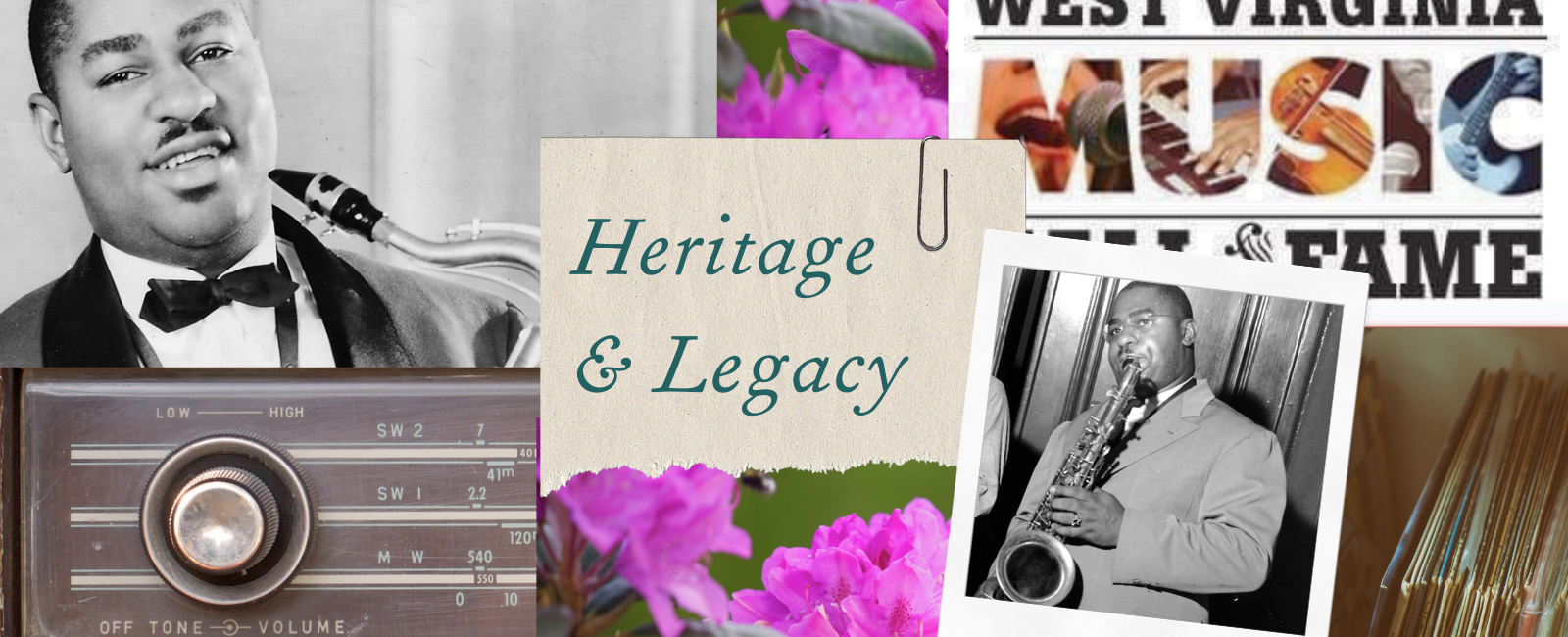
West Virginia Music Hall of Fame – Class of 2007
Gone Too Soon
Had Wheeling native, Leon “Chu” Berry’s life not been cut short when he died at age 33, in 1941, as the result of an automobile accident, who knows what might have been? Dan Morgenstern, director of the Institute of Jazz Studies at Rutgers University writes, “What Chu Berry did achieve, considering the brevity of his life, and a recording career that spans a mere decade, it is remarkable that his name continues to loom large in the annals of jazz.”. He continues, “Chu Berry belongs alongside Coleman Hawkins and Lester Young in the jazz pantheon. He was that good.”
The AllMusic Guide to Jazz informs its readers, “Chu Berry was considered one of the top tenor saxophonists in the 1930s, just below Coleman Hawkins (his main influence), Lester Young, and Ben Webster. Particularly strong on up-tempo numbers, Berry might have become an influential force if he had not died prematurely.”
According to the West Virginia Music Hall of Fame (WVMHOF), in 1937 and 1938 Metronome magazine named Berry to its All-Star Band, alongside such jazz immortals as Harry James, Benny Goodman, Ella Fitzgerald and Gene Krupa.
And in 2007, it was these many accolades and musical associations that led the founders of the WVMHOF to include Leon “Chu” Berry in its first class of honorees, also making him the first jazz musician to be inducted as a member of the Hall of Fame.
Leon Berry was born in Wheeling, WV on September 13, 1908, into a relatively well-to-do family that included a musical half-sister who played piano in a jazz trio that rehearsed in the Berry home, Chu’s love of music and the saxophone was born. (The “Chu” nickname would come later when in his 20s, Berry would often sport a “Fu Manchu” mustache.)
Berry saw Coleman Hawkins on tour and was inspired to take up the alto sax while at Lincoln High School in Wheeling. He continued playing in college and became a standout at West Virginia State College at Institute (now West Virginia State University).
According to “All About Jazz”, in the summer of 1928, Berry returned to the Ohio Valley after a year in college and joined the swing-jazz band, Perry’s Broadway Buddies. In 1929, he received his first nationally important professional engagement when he joined the Sammy Stewart band in Chicago. Within months he made his first foray into the New York jazz scene. He switched from alto sax after he joined the Stewart band.

Berry was soon in demand as a tenor player, and the major groups he played with included the bands of Benny Carter (1930), Teddy Hill (1933-35), Fletcher Henderson (1936) to whom he contributed the song “Christopher Columbus” and ultimately Cab Calloway with whom he joined up with in 1937. He performed as a sideman on recordings with many of the best-known artists of the era including Bessie Smith, Billie Holiday, and Count Basie.
As a member of the Cab Calloway Cotton Club Orchestra, Berry set new standards for the band and was in a lineup that included Cuban great Mario Bauza, and a young Dizzy Gillespie. Berry was strongly influenced by Coleman Hawkins, but soon developed his own distinctive style. Notes from a 2007, seven-disc box set of his music, “Chu Berry, The Classic Columbia and Victor Sides” informs:
Chu Berry was Coleman Hawkins’ equal in harmonic sophistication and his superior when it came to swing and drive. Excelling at performing in fast tempos, where his remarkable breath control, unerring sense of time, and even, strong tone production was his forte. He displayed a powerful momentum with an accuracy and fondness for plaintive high notes. Berry was especially adept at inserting a lot of individuality into a short space; he was brilliant in eight bars, a quality that endeared him to bandleaders.

Also of note, the Conn Saxophone Company introduced several models of both alto and tenor saxophones in his honor, the “Chu Berry Portrait Model”, which are now cherished by vintage collectors and players alike. (See Recommended Listening for Link to music played on a Chu Berry Model.)
What might have been? Leon “Chu” Berry died on October 31, 1941, near Conneaut Lake, Ohio, as the result of injuries he received in an accident three days earlier while a passenger in an auto taking members of the Cab Calloway Band to Canada for a job. The band left his chair empty for weeks afterward as a sign of respect.
Berry perished on the brink of a musical revolution. Bebop would soon alter jazz forever, and those who came before including Hawkins, Young, and Berry, did not always get enough credit for what they had helped bring about. But the players themselves knew. It was Coleman Hawkins who called him “the genius” and Charlie Parker who named his firstborn son Leon, in Berry’s honor.


RECOMMENDED LISTENING – by the author.
1. “Christopher Columbus” (1936). Written by Chu Berry. Performed with the Fletcher Henderson Band, also featuring Roy Eldridge. Berry’s most famous composition became a standard during the 1930’s.
“Christopher Columbus” (1936) Fletcher Henderson with Roy Eldridge and Chu Berry (youtube.com)
2. “Ghost of a Chance”. Often referred to as the song with Chu Berry’s best solo playing, this beautiful ballad shows that Berry could also slow the tempo down and work his magic.
Chu Berry – A Ghost Of A Chance – YouTube
3. “Stardust”- Played on a silver Conn 8M Chu Berry C-Melody saxophone. It’s not Berry doing the playing, but you do get to see his model of saxophone being played in service to this American songbook standard. Note the detail and craftsmanship in the construct of the instrument and in the performance of the tune.
Stardust solo on Conn 8M C Melody Saxophone – YouTube
4. Chu Berry. “The Sunny Side of the Street”. Some toe tapping music from a master of the tenor saxophone.
Chu Berry – On The Sunny Side Of The Street – YouTube
Photos sources: Personal Collection of Sean Duffy | Getty Images | SaxOnTheWeb.net | Discog
____________________